Missionaries Who Make a Difference

CSEC - an acronym too often heard in the municipalities, barangays, and villages of the beautiful islands of the Philippines—Commercial Sexual Exploitation of Children. Children trapped in the sex trade due to susceptibility and poverty become relegated to a life of unspeakable horrors which continue throughout their teen and adult lives. Today, nearly 400,000 are being trafficked in the Philippines and 80% are under the age of 18*. These girls are no different than any of God's children apart from being extremely poor, vulnerable, and at times, uneducated about the realities dwelling within the trade of prostitution.
The archipelago located in the Pacific Ocean, sits between East/West business traffic, making it convenient for nefarious stopovers—a tragic circumstance for this island nation and its young people. Local corruption is not exempt from blame either. So many communities look the other way as brothels exist anywhere there is an opportunity for financial gain. Honest local police and the Philippines Department of Justice work with agencies like Inter-Agency Council Against Trafficking and are always pushing back the tide, but it is difficult. Recently cyber-sex cafes have become the modern day vehicle of trafficking and harder to track. It's also a fact that broken households have escalated the crimes of familial sexual abuse and the extreme impoverishment of so many sadly causes some parents to dismiss the harm and justify this trade for sustainability.

The good Sisters of Mary Queen of Heaven Missionaries are on a mission of mercy for their country and its children. In 2025, the organization has made an unprecedented commitment to travel across the country and personally meet with dozens and dozens of local officials, NGOs, shelters, government agencies, teachers, and clergy to gather information about problems that exist in their respective areas. And at the same time, familiarize these groups, as well as high school students, with MQHM's mission: to rescue, educate, and rehabilitate as many victims as possible at its Home of Love Rescue and Rehabilitation Center in Tuburan, Cebu.
The Sisters’ ambitious plan includes collecting data on the locations of Red Light districts, the number of bars and brothels, and how many girls work in each, while learning what local communities are currently doing to combat the scourge. MQHM believes developing these partnerships is key to advancing the positive impact of its mission.
After identifying the areas of most significant concern, they visit the brothels one community after another. Dressed in plain clothes, they spend hours at night connecting with the girls and women, offering a listening ear and sharing the possibilities of a decent, alternative life beginning in the Home of Love. Many establishments turn them away, but many do not. Not surprisingly, most of those they speak with want a way out and a chance to attend school or job training to earn a more respectable living. But with no other means of survival due to a lack of education and skills, it seems impossible, especially if this is all you have known since a young age. Many have children as a result of their trade, which only compounds their situation. The Sisters' research also shows that suicides have become more prevalent due to depression, and alcohol and drug use are prevalent as they cope with the demand to perform repeated sexual encounters.


Dealing with the shame they believe they have brought on themselves adds to the tragic environment. Encouraging each to believe in the power of prayer and offering a future that could free them from this existence, the Sisters become friends and advocates, promising to stay in contact and return once a victim has chance to absorb the possibilities of escape. This personal contact with victims and the awareness they are creating in Filipino communities is having measurable outcomes as the Sisters and their partners work with the grace of God's help in this essential endeavor.
Yes, it is ambitious. But undeterred, the Sisters have developed teams with mission partners Vivian Santillan, Rose Rufin, Melchora Fronteras, and others. Collectively, the teams cover over 50 provinces, municipalities, towns, barangays, and villages.
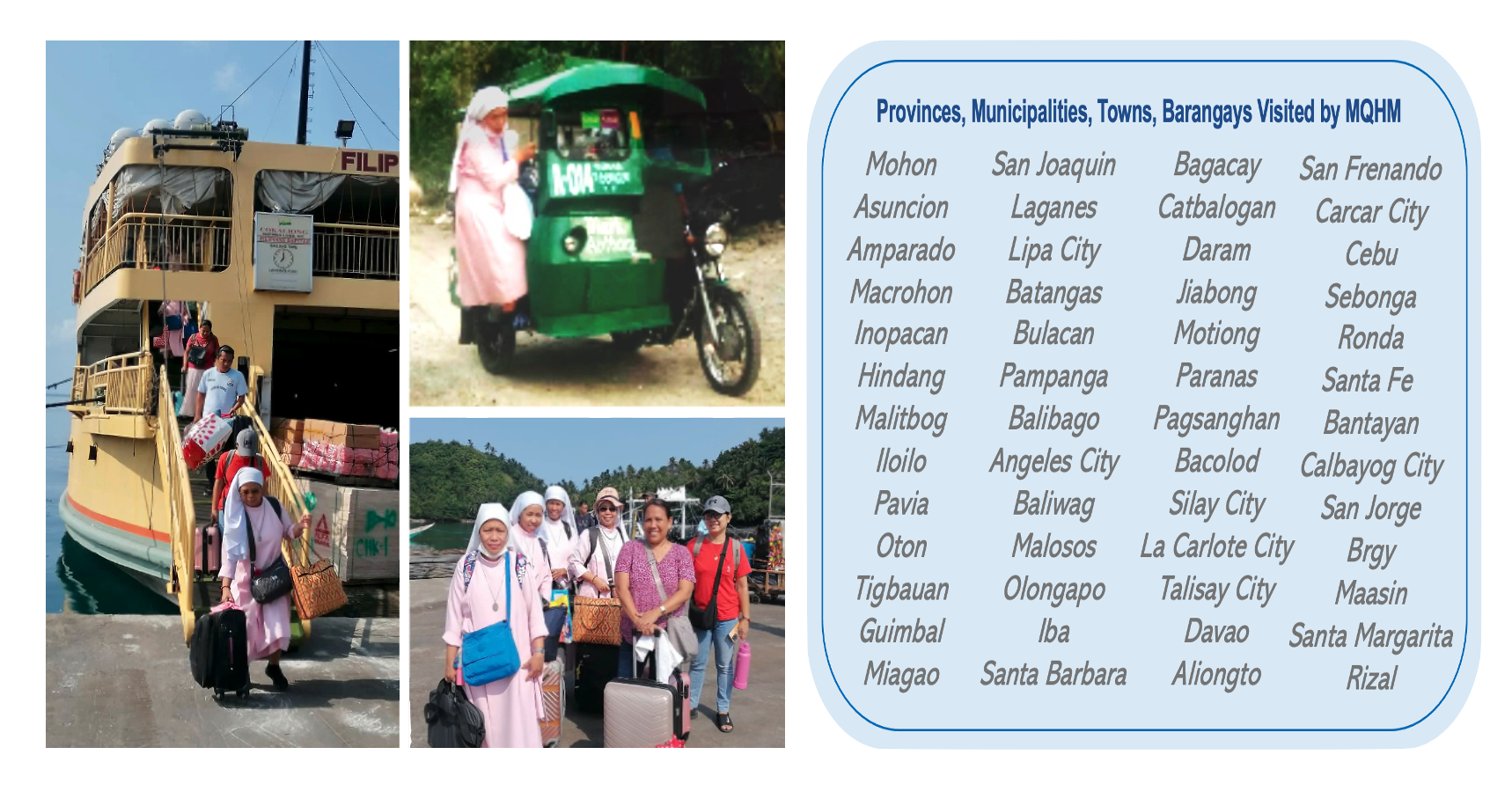
Teams of Sisters from Mary Queen of Heaven Missionaries and lay mission partners
There exists an entire global network of trafficking handlers preying on children and young women, and it is time the world takes collective notice. Only through the generosity of caring people of many countries can the good Sisters’ work continue and have meaningful success. Please visit MQHM.org and read the individual stories of rescue and survival and share the good fortune God gave you.
Story by Rhonda Kanet Chambless
*Sources: US State Department & Transparency International